European Innovation Ecosystems: Lessons from Ten Years of the German-French Academy for the Industry of the Future
Why Europe Needs Innovation Ecosystems
Over the past decade, I have gradually discovered that one of the most rewarding aspects of my academic career is helping transform scientific excellence into lasting collaborative ecosystems.
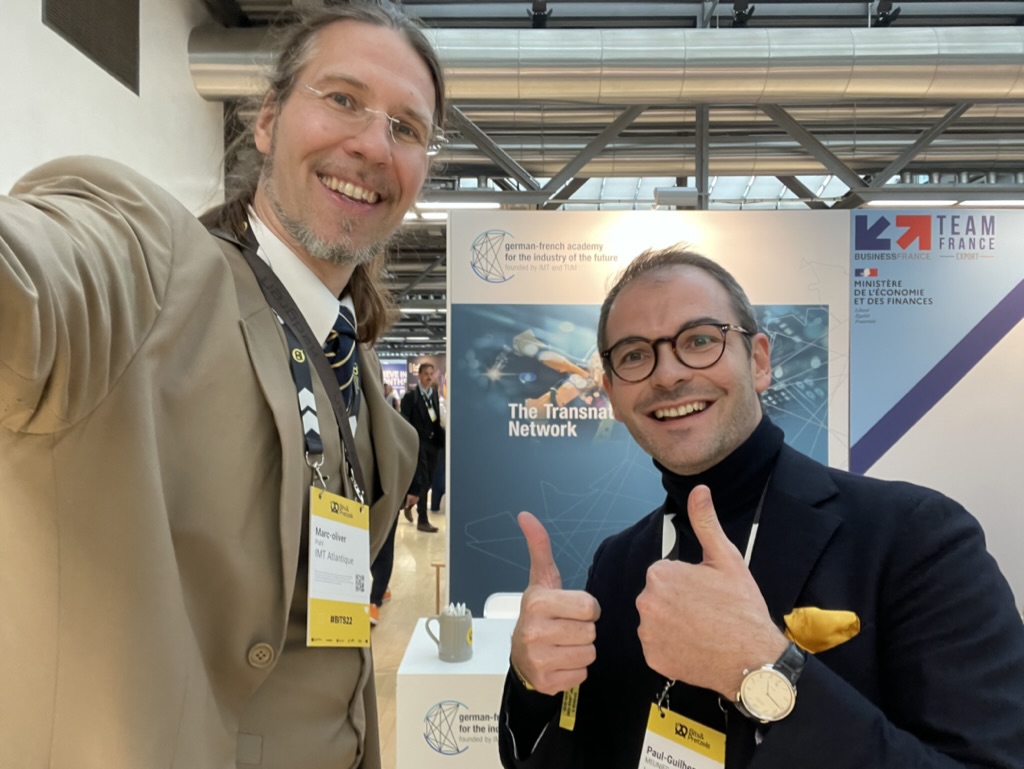
When the birthday cake appeared at our stand during Viva Technology 2026 to celebrate the tenth anniversary of the German-French Academy for the Industry of the Future, it looked like a simple celebration of a successful project between Technical University of Munich in Germany and Institut Mines Télécom in France.
Looking around, however, I realized that we were not celebrating ten years of an institution. That moment made me ask myself a simple question: How do successful European innovation ecosystems come into existence?
In this article
This article discusses
- European innovation ecosystems
- Franco-German research collaboration
- European Innovation Ecosystems building
- research, education and innovation
- policy recommendations
- lessons from the German-French Academy for the Industry of the Future
Before the story begins
Europe has long prided itself on academic excellence and industrial strength. Yet excellence alone is no longer sufficient.
Technological progress increasingly depends on combining expertise across disciplines, sectors, and countries. The ability to build trusted international ecosystems—where universities, companies, and public institutions collaborate seamlessly—has become a strategic asset.
Despite major initiatives such as Horizon Europe and ongoing debates on digital sovereignty, Europe still largely operates through fragmented projects rather than sustained ecosystems. Funding cycles are short. Evaluation criteria prioritise outputs over relationships. Institutional incentives rarely reward long-term collaboration.
Key Takeaways
- Research projects do not create ecosystems. People do.
- Ecosystems require long-term trust rather than short-term funding.
- Research, education and innovation should be developed together.
- Ecosystem builders deserve explicit recognition.
- The Franco-German partnership demonstrates how Europe can transform diversity into innovation.
Citable White Paper
If you would like to read, download, or cite this article, a professionally formatted white paper is available through Zenodo, providing a permanent archive and a persistent Digital Object Identifier (DOI).
European Innovation Ecosystems: Lessons from Ten Years of the German-French Academy for the Industry of the Future
DOI: https://doi.org/10.5281/zenodo.21234706
Suggested citation
Pahl, M.-O. (2026). European Innovation Ecosystems: Lessons from Ten Years of the German-French Academy for the Industry of the Future. Zenodo. https://doi.org/10.5281/zenodo.21234706
This gap is not technical—it is structural.
Communities are Europe’s most valuable innovation infrastructure.
The German-French Academy was conceived as an attempt to address it.
The central lesson is simple but often overlooked:
Research projects do not create ecosystems.
People do.
Funding, institutions, and political support are necessary. But lasting collaboration begins earlier—with curiosity, mutual respect, and the willingness to invest time in relationships before any formal project exists.
Many of the collaborations that today span multiple universities, industrial partners, and European programmes began with informal interactions: a conversation over coffee, a shared dinner after a workshop, an unexpected exchange of ideas.
Building such relationships requires a different kind of academic work. It involves connecting people who do not yet know each other, translating between disciplines, and maintaining trust across institutional and national boundaries over years.
Projects have a beginning and an end.
Communities do not.
Celebrating Ten Years of the German-French Academy for the Industry of the Future
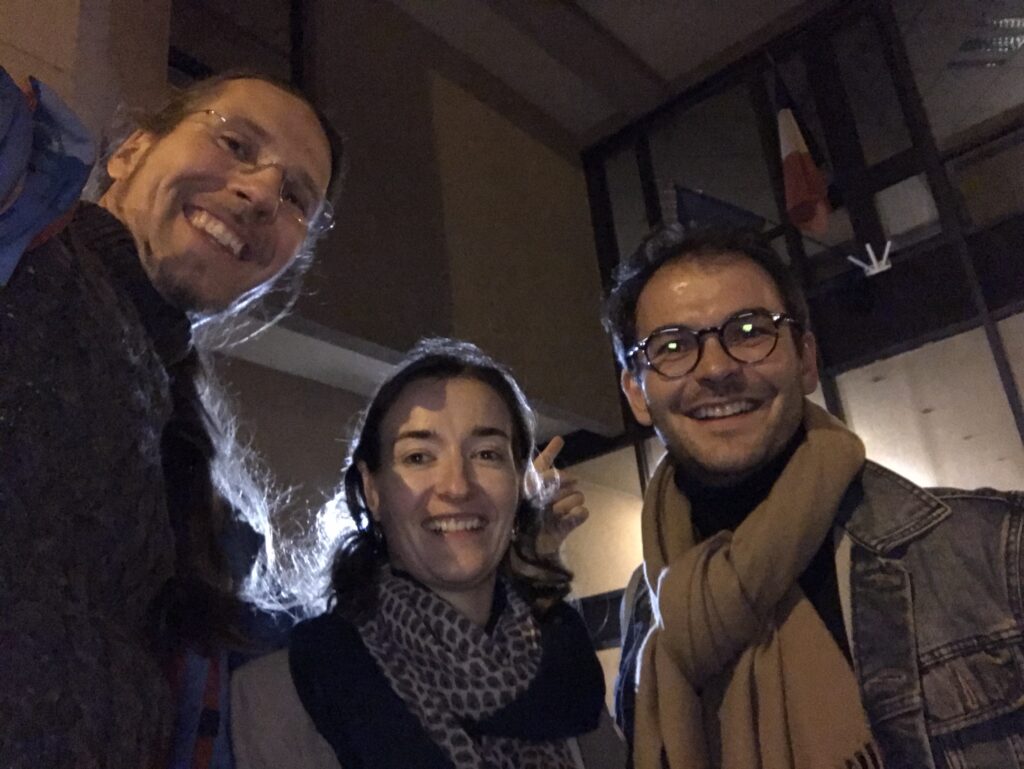
“Some anniversaries celebrate the past. Others remind us why the future is worth building.”
At Viva Technology 2026, the GFA celebrated its tenth anniversary. What appeared at first as a simple celebration revealed something deeper.
Colleagues reunited. Students engaged with professors. Industrial partners explored new collaborations. Visitors encountered tangible examples of Franco-German innovation.
The Academy’s greatest achievement was not a single project or programme. It was the community itself.
Over nearly a decade, the GFA has connected more than 20 partner institutions, supported dozens of joint research projects, and engaged hundreds of students and researchers. It has contributed to European proposals, fostered startups, and influenced educational formats.
These outcomes matter. But their true significance lies in what they represent: a functioning cross-border ecosystem.
People occasionally ask me how a cybersecurity professor became so deeply involved in building international research ecosystems.
The honest answer is that I never consciously planned it.
Every collaboration naturally led to another.
Research generated educational initiatives.
Education attracted industrial partners.
Industrial partnerships opened new research questions.
Looking back today, I realize that European Innovation Ecosystems building gradually became not an additional activity—but the environment in which all my other activities could thrive.
A vision whose time has come
Around 2015, Europe entered a period of profound technological transformation. Artificial intelligence moved from laboratories into industry. Cybersecurity became a strategic priority. Concepts such as Industry 4.0 and digital twins began reshaping manufacturing.
At the same time, a crucial realisation emerged:
- No single university.
- No single company.
- No single country.
could address these challenges alone.
Germany brought engineering excellence and strong industry links. France contributed world-class research and ambitious innovation policies. The GFA, jointly established by Institut Mines-Télécom (IMT) and the Technical University of Munich (TUM), was designed as a platform to connect these strengths.
Together with institutions such as the DFH/UFA, the Academy gradually became a prototype for a broader European approach: building ecosystems that integrate research, education, and industry across borders.
The Academy demonstrated what becomes possible when visionary institutions complement one another.
While the GFA created a platform for European Innovation Ecosystems building, the DFH/UFA has for decades provided the long-term foundation on which Franco-German academic cooperation can flourish.
In many respects, both initiatives illustrate the same lesson: Relationships deserve institutions.
Building an ecosystem
Every ecosystem depends on individuals who make it possible—often without formal recognition.
These individuals can be described as ecosystem builders: people who connect actors, create trust, and sustain collaboration over time.
For the GFA, one such figure is Paul-Guilhem Meunier. Paul showed me that ecosystems are not managed. They are cultivated. That distinction has stayed with me ever since. His contribution illustrates what distinguishes ecosystem builders from project managers. While projects can be administered, ecosystems must be cultivated.
He connected researchers, universities, companies, and public institutions around a shared vision. He created conditions in which collaborations could continue long after formal structures ended.
This role remains largely invisible in academic and policy systems. Yet without it, ecosystems do not emerge.
Recognising and supporting ecosystem builders should therefore become a strategic priority.
Helping shape the Academy
Looking back today, I realize how naturally my role evolved alongside the Academy.
Initially, I joined through collaborative research. Soon afterwards, I became increasingly involved in shaping the Academy itself.
Together with many wonderful colleagues, I helped establish collaborative research projects, develop the educational strategy, launch international doctoral schools, build lifelong learning activities, serve on the Steering Committee, contribute to the editorial board of the Academy’s strategy brochure, represent the Academy at conferences and trade fairs, and continuously connect new researchers, institutions and industrial partners.
Looking back today, I realize that this unique combination gave me the opportunity to experience ecosystem building from almost every perspective.
- Research informed education.
- Education attracted talent.
- Industrial collaboration generated new questions.
- Innovation drew in new partners.
At the time, these activities appeared largely independent. Today I recognize them as different expressions of one underlying objective: Building connections that outlast projects.
This integration is precisely what defines a European Innovation Ecosystems.
None of this would have been possible without remarkable colleagues including Paul-Guilhem Meunier, Axel Honsdorf, Cosima Stocker, Olivia Pahl, Diane Baumer, Morwenna Joubin, and many others who each contributed their own unique strengths to this ecosystem.
Several projects that later attracted European funding started with conversations that lasted no more than fifteen minutes.
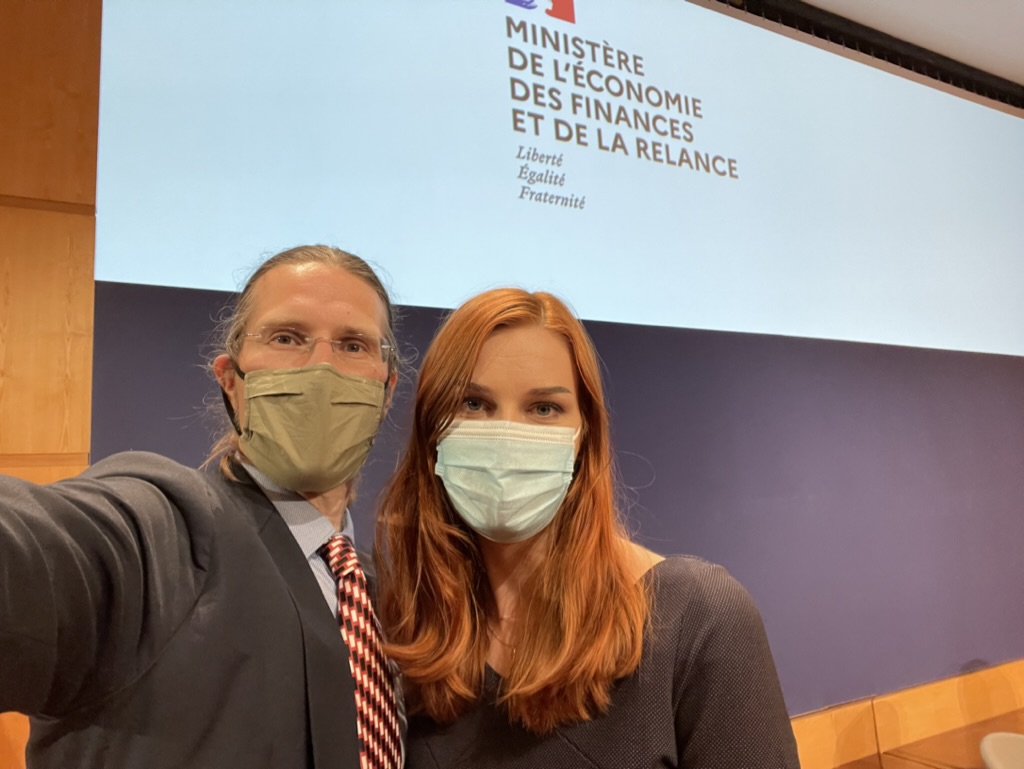
Research as community building
One of the most fascinating aspects of the Academy was that many of our most successful collaborations were never planned.
One of the Academy’s earliest ambitions was to transform networking into concrete scientific collaboration.
Projects such as SCHEIF, TRUE-VIEW, DTACK, and P4D addressed topics ranging from cybersecurity to digital twins and privacy-preserving data processing.
The projects eventually ended.
The collaborations continue.
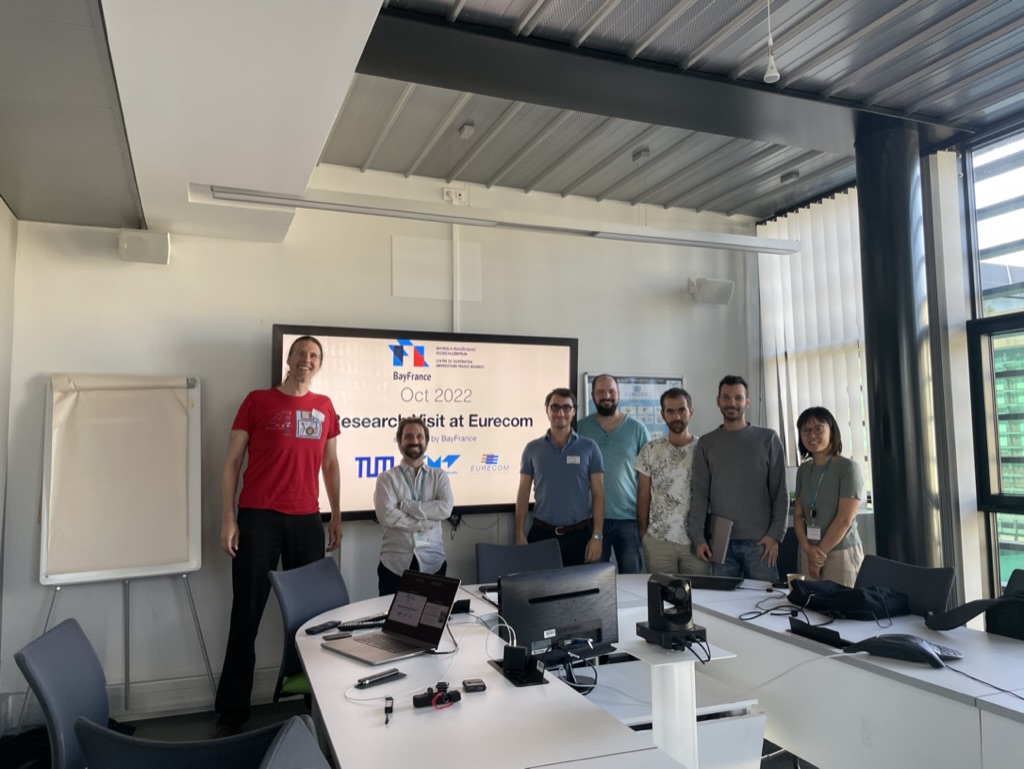
Looking back today, I find it striking that the scientific publications were only one part of the outcome. The collaborations themselves became infrastructure. Researchers who met through one project later supervised doctoral students together. Joint publications evolved into European proposals. In retrospect, perhaps the most valuable product of these projects was not knowledge. It was trust.
Education as a strategic pillar
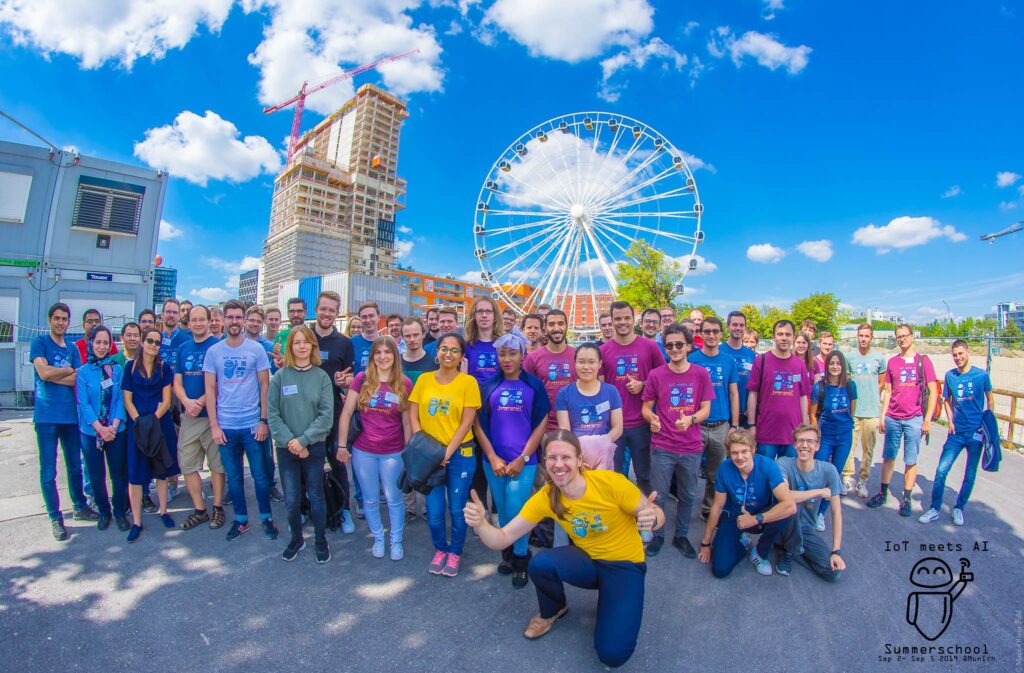
Innovation also happened in the way we designed learning itself.
Education is often treated as a secondary function of universities. In reality, it is central to ecosystem-building.
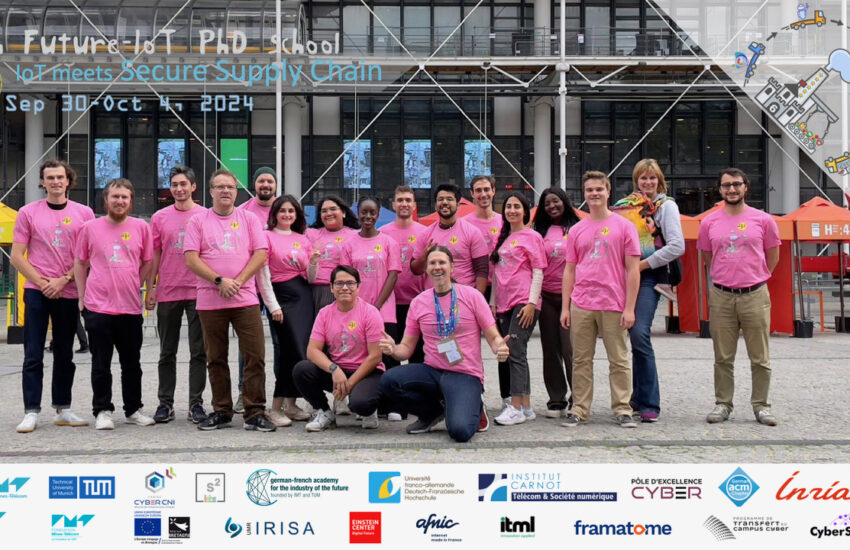
Initiatives such as the Future-IoT PhD school series have brought together hundreds of participants from across Europe since 2018. MOOCs such as Working in the Future and Cybersecurity Essentials: From Risk to Resilience have extended access beyond traditional campuses.
These initiatives demonstrate that education is not merely knowledge transfer. It is community creation.
A doctoral school may last a week. The relationships formed can last a career.
The longer I worked on these initiatives, the more I realized that universities often think of education as the transfer of knowledge. I increasingly see it as the creation of communities. A doctoral school lasts one week. The relationships established during that week often last an entire career. Seen this way, education becomes an essential component of innovation ecosystems rather than merely a consequence of research.
The Franco-German partnership as a European laboratory
The GFA is more than a bilateral initiative. It is a laboratory for European collaboration.
France and Germany differ in academic culture, funding systems, and institutional structures. Precisely because of these differences, collaboration requires effort—and yields strength.
This model can be replicated and adapted across Europe. Similar ecosystems could connect regions with complementary strengths, from the Nordics to Southern Europe, from Central Europe to the Baltics.
Scaling such models is essential if Europe is to compete globally.
Building Bridges
Looking back, I realize that my own contribution naturally gravitated toward connecting different worlds.
- Research with education.
- Universities with industry.
- France with Germany.
- Students with researchers.
- Scientific excellence with societal impact.
That realization surprised me. At the time, the activities appeared unrelated.
Today I recognize them as different expressions of one underlying idea: Building bridges.
The Four Ingredients of Sustainable Innovation Ecosystems
Looking back, I learned not to underestimate the value of simply bringing excellent people into the same room.
Looking back, I believe every successful multinational ecosystem rests on four foundations.
- People – Relationships precede projects.
- Purpose – Shared vision matters more than available funding.
- Platforms – Communities need recurring places to meet.
- Patience – Ecosystems grow over decades, not project cycles.
Looking back, these four ingredients quietly shaped almost everything we built within the Academy.
From reflection to recommendation
Communities are Europe’s most scalable innovation platform.
Europe is entering a decisive decade. In a world shaped by artificial intelligence, cybersecurity, and complex digital infrastructures, its future competitiveness will not be determined solely by the excellence of its universities or the strength of its industries. It will depend on whether it can connect them.
If Europe fails to build strong, trusted innovation ecosystems, it risks fragmentation, duplication of effort, and increasing dependence on external technological powers. If it succeeds, it can transform its diversity into a decisive advantage.
This article argues that ecosystem-building must become a central policy and institutional priority in Europe. It draws on ten years of experience with the German-French Academy for the Industry of the Future (GFA) to show what works, what is missing, and what must change.
If ecosystem-building is to become a strategic priority, concrete action is required. Based on ten years of experience, several recommendations emerge:
- Reform funding models
European and national funding programmes should support long-term ecosystem development, not only short-term projects. This includes multi-phase funding, support for coordination activities, and resources for relationship-building. - Recognise ecosystem builders
Academic and policy systems should explicitly value individuals who build and sustain collaborations. Evaluation criteria must go beyond publications and grants to include community-building activities. - Integrate research, education, and innovation
Funding and institutional structures should encourage integrated approaches that combine research projects, educational programmes, and industry collaboration within a single ecosystem. - Support cross-border institutional platforms
Initiatives like the GFA should be expanded and replicated. European programmes such as Horizon Europe can play a key role by supporting permanent cross-border structures rather than temporary consortia. - Measure what matters
Evaluation frameworks should include indicators of ecosystem health: network density, long-term partnerships, mobility of students and researchers, and sustained collaboration beyond funding cycles. - Invest in people
Funding programmes often focus on projects.
Successful ecosystems focus on people.
Every euro invested in connecting outstanding researchers, educators, entrepreneurs and industrial partners creates value that extends far beyond the lifetime of individual projects.
Trust remains Europe’s most valuable innovation infrastructure.
The quiet role of institutions
Ecosystems require institutions willing to invest patiently in people.
Organisations such as the GFA and the Deutsch-Französische Hochschule / Université franco-allemande provide the infrastructure that enables collaboration. Their role is often invisible, but essential.
Strengthening such institutions should be part of Europe’s strategic agenda.
The strongest ecosystems are often supported by people whose contributions remain largely invisible.
- Connecting researchers.
- Introducing students to mentors.
- Helping universities understand one another’s cultures.
- Designing educational formats.
- Moderating discussions.
- Writing strategy documents.
These activities rarely appear in publication metrics.
Yet without them, many of the measurable achievements we celebrate would never have happened.
Perhaps academia should spend more time recognizing those who patiently build the environments in which scientific excellence becomes possible.
Looking ahead
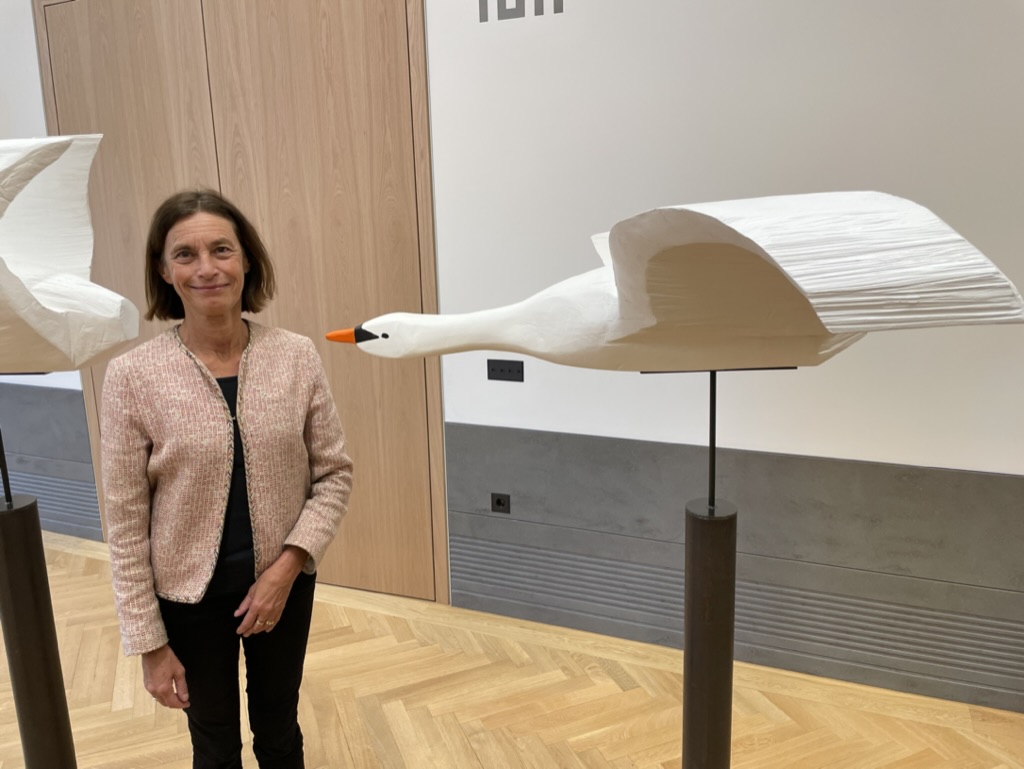
Europe’s challenges—artificial intelligence, cybersecurity, digital sovereignty, sustainable industry—are interconnected and global.
Addressing them requires more than excellence. It requires connection.
If Europe continues to prioritise projects over ecosystems, it risks falling behind. If it invests in ecosystem-building, it can leverage its diversity as a strength.
The choice is clear.
Conclusion
Excellent research produces discoveries. Excellent ecosystems multiply them.
Europe’s future competitiveness depends on its ability to build and sustain innovation ecosystems.
The experience of the German-French Academy shows that this is possible—but not automatic. It requires deliberate investment, institutional support, and recognition of those who make it happen.
When we cut the birthday cake at VivaTech, we officially celebrated ten years.
Looking around, however, I realized that the Academy’s greatest achievement could not be photographed.
It existed in the conversations taking place around us.
- Researchers greeting collaborators.
- Students introducing mentors.
- Industrial partners planning future projects.
- Friends meeting again after years.
The projects that created those conversations will eventually all come to an end.
The community will not.
Looking back, I feel deeply grateful to everyone who helped build it.
And I hope the next decade will produce many more ecosystems like it—not only between France and Germany, but throughout Europe.
Because ideas spread through publications.
Trust spreads through people.
And communities built on trust are ultimately Europe’s greatest innovation.